China's Supreme Court Declares Automation Alone Cannot Justify Employee Dismissal
Chinese Supreme Court rules AI cost-cutting isn't grounds for firing workers, ordering companies to uphold labor laws and protect jobs against automation-driven layoffs.
Breaking: Landmark Ruling Protects Workers from AI-Driven Layoffs
China's Supreme Court has issued a landmark ruling that companies cannot fire employees solely because artificial intelligence can perform their jobs at a lower cost. The decision, announced Tuesday, declares that automation alone does not constitute a valid reason for dismissal under Chinese labor law.
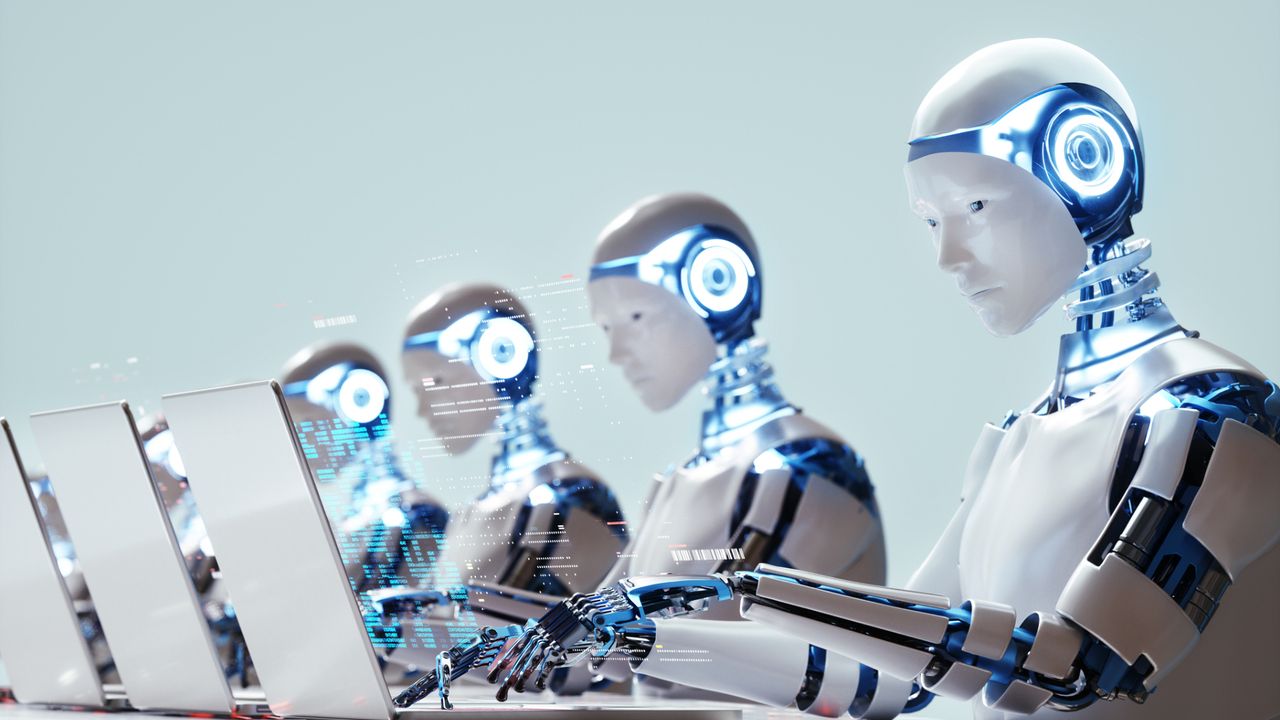
This ruling directly challenges a growing trend among firms to replace human workers with AI systems to cut expenses. Legal experts say it sets a precedent that could reshape the country's labor market amid rapid technological change.
Court's Stance: Cost Savings Not a Legal Basis for Termination
In its written judgment, the court emphasized that "economic efficiency gained through automation does not override workers' statutory rights". The case involved a manufacturing company that laid off 120 workers after installing AI-powered assembly lines, arguing the move was necessary to stay competitive.
"This verdict sends a clear message: employers cannot use cheaper technology as a loophole to bypass labor protections," said Zhang Wei, a labor law professor at Peking University. "The court has affirmed that termination must be based on employee conduct or genuine redundancy, not mere cost-cutting."
Immediate Impact: Workers Gain New Shield Against Automation
For millions of Chinese factory and service workers, the ruling provides a legal shield against mass displacements driven by AI adoption. Labor rights groups hailed the decision as a victory for job security in the digital age.
However, corporate lobbyists have expressed concern, warning that it may slow innovation. "Businesses need flexibility to adopt new technologies," argued Li Ming, president of the China Enterprise Confederation. "This ruling could inadvertently make companies hesitant to invest in AI."
Background: Labor Laws vs. Tech Disruption
Chinese labor law, overhauled in 2008, requires employers to have just cause for termination—typically related to employee performance, misconduct, or economic downsizing. The law does not explicitly address automation, leaving room for interpretation.

As AI rapidly replaces routine jobs—from customer service to assembly—disputes over layoffs have surged. According to the Ministry of Human Resources, complaints about unfair dismissal linked to automation rose 35% in 2023. This case became a test of whether cost reduction qualifies as an economic reason for layoffs.
The court's decision clarifies that "simple cost advantage" from AI does not meet the legal definition of severe economic difficulty required for mass layoffs. Companies must instead prove financial distress beyond tech-driven savings.
What This Means: A New Balance Between Innovation and Worker Rights
This ruling forces Chinese companies to rethink their automation strategies. While they can still adopt AI to boost efficiency, they cannot use it as a free pass to fire employees. Instead, firms must offer retraining, redeployment, or voluntary redundancy packages.
- For workers: Increased job security, but pressure to upskill for roles alongside AI.
- For businesses: Higher labor costs in the short term; longer-term need to integrate humans and machines.
- For policymakers: A framework to manage tech disruption without sacrificing social stability.
Economist Chen Yu of the Chinese Academy of Social Sciences noted: "This is not anti-technology. It's about ensuring the benefits of AI are shared and workers are not left behind." The ruling may also influence similar debates in other countries struggling with automation's impact on employment.
For more on labor rights, see our Labor Law Guide.