Tesla’s 1 Million Humanoid Robots Per Year: Who Will Buy Them All?
Tesla plans to produce 1 million Optimus humanoid robots yearly. This article analyzes potential buyers: manufacturing, logistics, service industries, and the challenges of such massive scale.
Tesla’s Ambitious Robot Production Plans
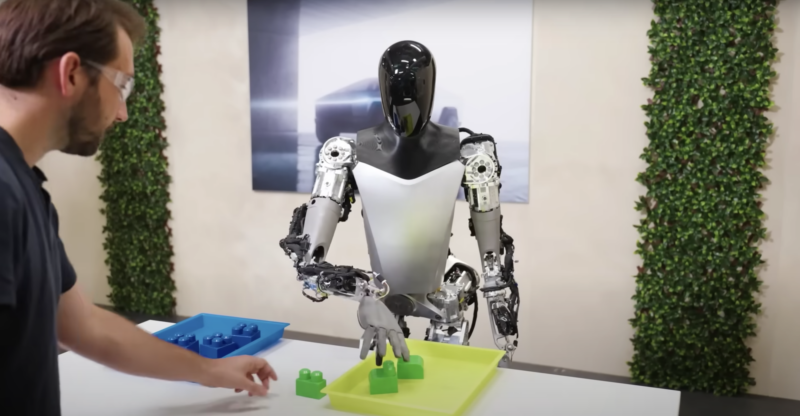
Tesla’s latest quarterly shareholder report made three mentions of “robots,” with two of them appearing in the dedicated Robotics section. The company revealed that preparations for its first large-scale Optimus factory will begin in the second quarter, and that the first-generation production line—designed to churn out 1 million humanoid robots annually—will replace the Model S assembly line. This bold target raises a critical question: who exactly is Tesla planning to sell all these humanoid robots to?
Factory Preparations and Timeline
The Optimus robot, also known as Tesla Bot, has been in development for years. The latest update confirms that the company is moving from prototype testing toward mass production. By building a dedicated factory with a capacity of one million units per year, Tesla is signaling that it sees humanoid robotics as a mass-market product—not just a niche industrial tool. The decision to repurpose the Model S line suggests cost-saving efficiencies, but it also underscores the magnitude of the scale: the same facility that once produced a few thousand luxury electric sedans each year will now be tasked with assembling a million humanoid androids annually.
Who Are the Potential Buyers?
For Tesla’s production target to be viable, the company needs a customer base that can absorb such volume. Let’s explore the most likely sectors.
Manufacturing and Assembly Plants
Industrial automation is the most obvious initial market. Humanoid robots can perform repetitive tasks such as part handling, machine tending, and simple assembly operations. While traditional industrial robots already excel at these jobs, a humanoid form factor offers flexibility—it can navigate human-designed spaces and use existing tools without major reconfiguration. Automakers and electronics manufacturers could become early adopters, especially if the Optimus robot proves cost-competitive with traditional automation and human labor.
Logistics and Warehousing
Warehouses and distribution centers are another prime market. Humanoid robots can lift boxes, sort packages, and load or unload trucks. Companies like Amazon and DHL already use robotic systems, but they are mostly wheeled or gantry-based. A humanoid robot that can walk, climb stairs, and fit into tight spaces could handle last-mile sorting, restocking, and even outdoor yard operations. If Tesla can price the Optimus robot competitively, the logistics sector alone could absorb hundreds of thousands of units per year.
Service and Healthcare
Beyond industrial settings, humanoid robots could be deployed in service roles: hospitals for transporting supplies, hotels for cleaning, and retail for shelf stocking. In healthcare, they might assist with patient lifting or mobility support, relieving physical strain on human staff. However, these applications require high reliability, safety certifications, and regulatory approvals—factors that could slow adoption compared to factory environments.
Domestic and Consumer Markets
Could Tesla sell humanoid robots to ordinary households? The idea of a robot butler or nanny is tantalizing, but the cost and complexity make it a distant possibility for the next few years. A mass-market humanoid robot would likely need to be priced below $20,000 to spark residential demand, and even then, most families would find it hard to justify the expense. Tesla might focus on business-to-business sales first, leaving the home market for later generations.
Challenges to the One-Million-Unit Target
Even if demand exists, reaching a production rate of 1 million humanoid robots per year is unprecedented. No company has ever manufactured that many advanced robots of any kind. The supply chain for actuators, sensors, batteries, and artificial intelligence hardware would need to be massive. Moreover, Tesla will have to prove that the Optimus robot can perform useful tasks reliably enough to justify its purchase.
Market Demand vs. Production Scale
Critics argue that the global market for humanoid robots is currently tiny, with only a few thousand units sold annually by competitors like Boston Dynamics. For Tesla to sell a million units, it would need to create demand where little exists today—or adopt a strategy of aggressive pricing that undercuts both human labor and existing automation. This has worked for the company’s electric vehicles, but robots are not cars; they require more customization, software integration, and aftermarket support.
Replacing the Model S Line
Converting the Model S line to robot production is a double-edged sword. It reduces capital expenditure, but it also implies that Tesla is willing to sacrifice some vehicle production capacity in favor of robotics. This move suggests that CEO Elon Musk believes the robot business could eventually dwarf the car business in revenue and profit, a vision he has hinted at in past earnings calls.
Conclusion
Tesla’s plan to build 1 million humanoid robots per year is either visionary or overambitious, depending on your perspective. The company’s likely initial customers are industrial and logistics firms looking for flexible automation. However, for the factory to run at full capacity, Tesla will need to expand the market drastically—either by lowering prices to create new demand or by dominating multiple sectors simultaneously. Investors and industry watchers will be watching the Q2 factory preparations closely for clues about how serious Tesla is about making this robot dream a reality.