IBM Vault 2.0: Key Enhancements for Seamless Secrets Management
IBM Vault 2.0 enhances UX with onboarding wizard, visual policy generator, revamped nav bar, and improved reporting for easier secrets management adoption.
IBM Vault 2.0 marks a significant step forward in making secrets management more accessible and efficient. With a focus on reducing the learning curve and improving operational visibility, the latest release introduces user interface enhancements, an onboarding wizard, a visual policy generator, and improved reporting. These updates are designed to help organizations quickly adopt and maximize Vault's capabilities without requiring deep expertise. Below, we answer common questions about these new features.
What is the primary goal of the UI enhancements in IBM Vault 2.0?
The main goal is to lower the barrier to entry for new users while streamlining the experience for existing ones. The team identified two key pillars: helping customers easily understand and discover features, and matching features intuitively to customer problems rather than expecting them to be Vault documentation experts. This shift aims to enable users to quickly adopt features with best practices, strengthening their ability to deliver on their own roadmaps. Enhancements like the onboarding wizard and visual policy generator are direct results of this approach, making Vault more intuitive and reducing the need to consult external resources.
How does the onboarding wizard simplify initial setup?
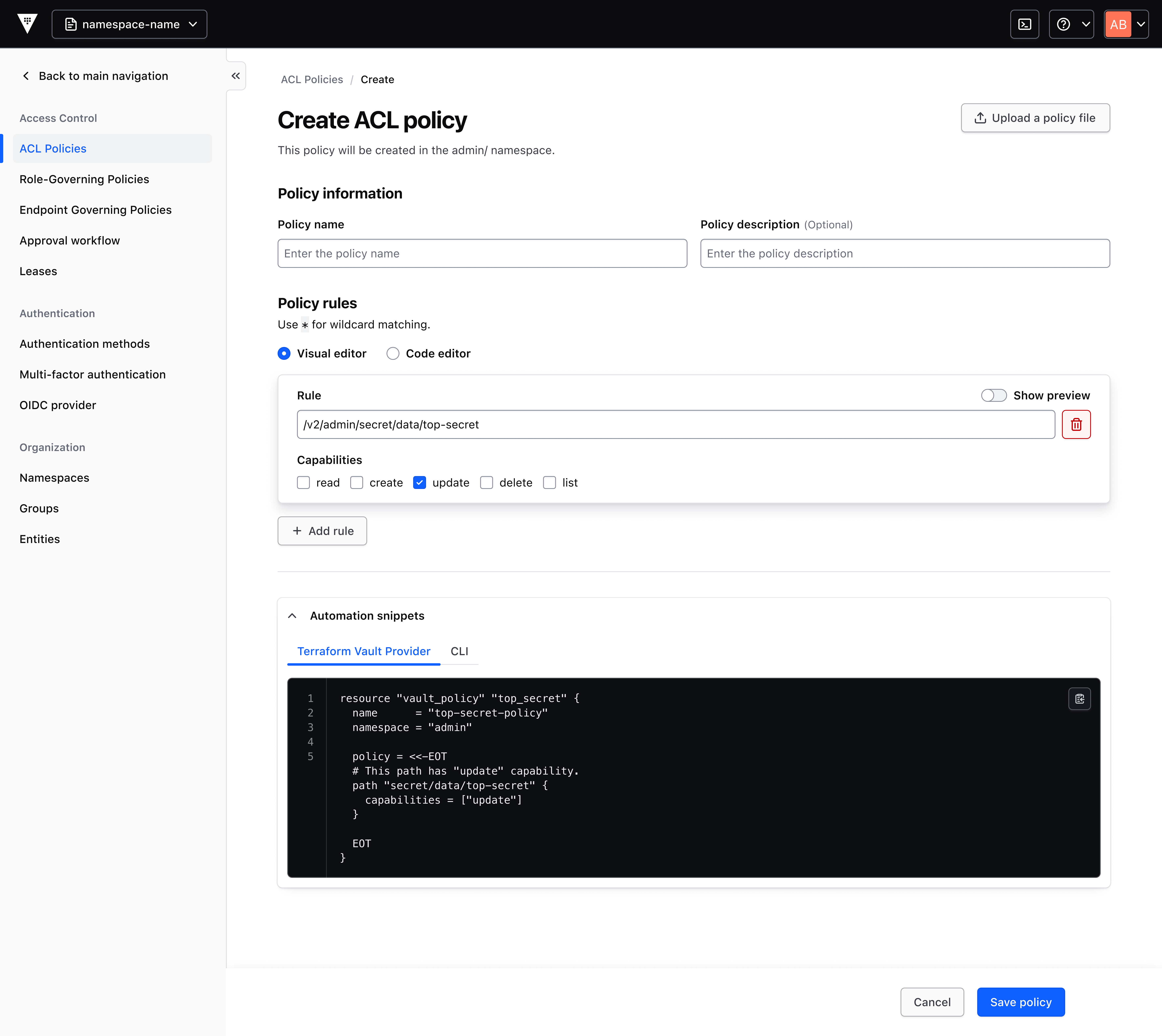
The onboarding wizard guides users through simple questions about how they intend to use a particular feature. Based on the answers, it generates an editable code snippet that supports their specific use case. This eliminates the need to manually search through documentation or write complex configuration from scratch. The wizard is designed to accelerate the onboarding process, helping users get started with Vault quickly and confidently. For example, if a user wants to set up a secret engine, the wizard asks about the type of secrets and access patterns, then produces a ready-to-use policy snippet or configuration block. This approach not only saves time but also promotes adherence to best practices by generating pre-validated code.
What is the visual policy generator and how does it help administrators?
The visual policy generator provides a pre-filled, contextual UI form that generates policy snippets. Since new Vault users have no permissions by default, assigning access rights traditionally required writing custom policy code—a barrier that can slow feature adoption. The generator simplifies this by allowing administrators to fill out forms with parameters like paths, capabilities, and identities, then instantly producing the corresponding policy. The snippet can be copied for use in the Terraform Vault Provider (recommended) or saved directly to the Vault cluster. This reduces operational burden and minimizes errors from manual coding, making policy management more accessible even for users less familiar with Vault's policy language.
How was the navigation bar revamped in Vault 2.0?
The navigation bar was redesigned to group features by customer problems rather than by technical categories. Previously, users had to know the specific product area they needed, which often required familiarity with Vault's internal architecture. The new layout centers the customer experience by contextualizing features based on common tasks or goals, such as secrets management, identity brokering, or data protection. This makes it easier for users to find the right tool for their immediate need without prior expertise. For example, instead of searching through a list of engines, users see problem-oriented sections like "Store Secrets" or "Manage Access," each containing relevant features and quick-start actions.
What reporting improvements does Vault 2.0.1 offer?
Vault 2.0.1 introduces enhanced visibility into consumption patterns across secrets management, key lifecycle management, identity brokering, and data protection. These reporting improvements help organizations better understand how Vault is used across their infrastructure. The dashboards provide greater transparency into usage patterns, enabling teams to support forecasting, planning, and governance initiatives. For instance, administrators can now view detailed metrics on secret rotation frequency, policy usage, and key lifecycle events. This insight helps optimize resource allocation and ensures compliance with internal policies. The reporting tools are designed to complement the UI enhancements, giving users both an intuitive interface and deeper operational visibility.
Why did IBM prioritize user onboarding in Vault 2.0?
Historically, becoming proficient with Vault required accessing disparate knowledge not contextualized within the product. Users had to rely on developer docs, HashiCorp videos, and community content to piece together how to use features effectively. IBM recognized this as a major friction point, especially for organizations looking to adopt secrets management at scale. By prioritizing onboarding, Vault 2.0 aims to reduce the "PhD in Vault" requirement and enable customers to realize value sooner. The introductory pages, onboarding wizard, and visual policy generator all serve to contextualize features within the product, helping users understand not just how to use a feature but why it matters for their specific challenges.